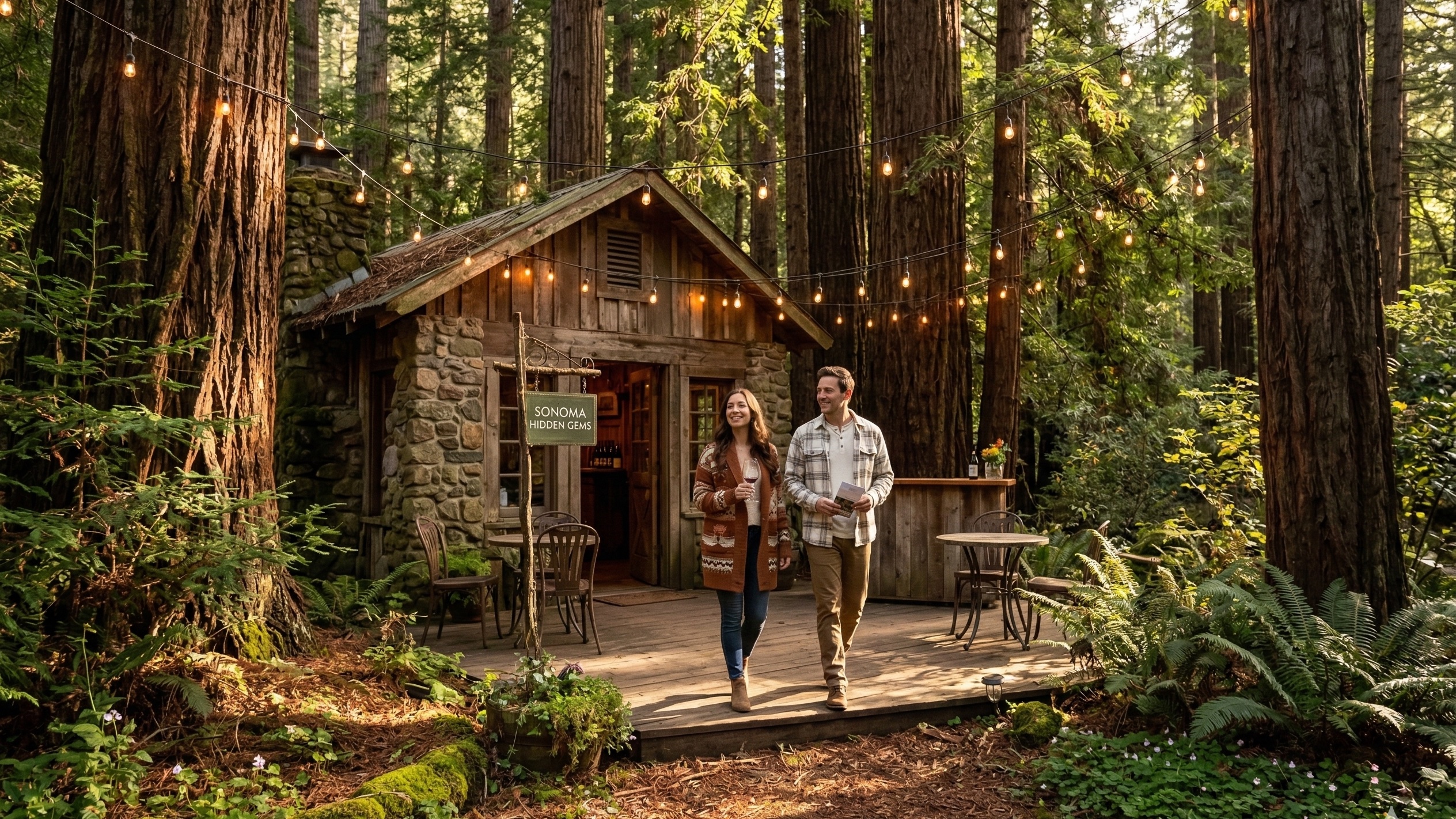
Sonoma County's Hidden Gems: 10 Under-the-Radar Wineries
The Sonoma wineries that don't show up on every top-10 list — smaller producers, stunning settings, and some of the best wines you'll find anywhere.
Sonoma County is built for discovery. Where Napa Valley concentrates its wineries along a single valley corridor, Sonoma spreads across a patchwork of valleys, ridgelines, and coastal hills — each with its own climate, its own grapes, and its own personality. That geography means there are incredible wineries tucked into places that most visitors never find.
The ones on every "best of" list are worth visiting. But some of the most memorable tastings happen at the places that take a little more effort to find — the family-run estate down a gravel road, the winemaker pouring at a counter in a barn, the hilltop spot with a view that no one told you about.
Here's how to find them.
What Makes a Hidden Gem
It's not about being obscure for the sake of it. The best under-the-radar wineries share a few things:
Small production. Under 5,000 cases a year, sometimes well under 1,000. The wine never makes it to store shelves because they sell it all through the tasting room and their mailing list. The only way to try it is to show up.
Off the main road. Not on Highway 12 or the stretch of Healdsburg Avenue that every tour bus drives. These are the places where the GPS sends you down a road you're not sure about, and then you round a corner and the view stops you cold.
Personal attention. At a small winery, the person pouring might be the owner, the winemaker, or someone who's been there since the beginning. The conversation is different. They know every vine, every barrel, every decision that went into the bottle. That kind of tasting leaves a mark.
Locals actually go there. The restaurant workers, the vineyard managers, the people who live in Sonoma year-round — the places they drink on their days off are usually not the ones in the tourist brochure.
Where to Look: A Sub-Region Guide
Each corner of Sonoma produces something different, and the hidden gems in each area reflect what grows best there.
Russian River Valley: The Pinot Noir Heartland
Russian River Valley is known for world-class Pinot Noir and Chardonnay, shaped by the fog that rolls in from the coast every morning. The famous names here are justifiably famous — but for every well-known producer, there are several smaller ones making equally stunning wine with far less fanfare.
Look for family estates along Westside Road and the back roads between Forestville and Sebastopol. Many produce just a few hundred cases of Pinot Noir from single vineyards, and the tasting experience often involves standing in the actual vineyard where the grapes grew. Some are appointment-only, and the appointment might be with the person who made the wine.
The Pinot Noir from these smaller producers tends to be more site-specific and distinctive — less polished in a corporate way, more expressive of the specific patch of soil and fog influence where it was grown. For anyone who loves Pinot, this is sacred ground. The guide to Sonoma Pinot Noir is a good starting point.
Dry Creek Valley: Zinfandel Country
Dry Creek Valley is where Zinfandel lives its best life. Old vines — some over 100 years old — produce small clusters of intensely flavored fruit that makes wines with depth, character, and a sense of place that's hard to replicate anywhere else.
The hidden gems here are often the old-vine Zin specialists. Families who've been farming the same hillside for three or four generations, making wine the way they always have. The tasting rooms might be humble — a counter in a barn, a picnic table under an oak tree — but the wine is extraordinary.
Dry Creek Road and its side roads are the treasure map. Drive slowly, watch for small signs, and don't be intimidated by a dirt driveway. Some of the best experiences in Sonoma are behind those driveways.
This area also produces excellent Sauvignon Blanc — crisp, mineral, nothing like the grocery store version. Ask for it at any Dry Creek tasting, and the response will usually be something like "that's actually what the locals drink."
Sonoma Valley: History and Range
Sonoma Valley — the original wine country, technically. This is where California winemaking started, and the depth of history here adds a layer to every tasting.
The town of Sonoma itself has a charming plaza surrounded by tasting rooms, but the real finds are in the hills on either side of the valley. The east side, toward the Mayacamas Mountains, produces structured reds from volcanic soils. The west side, open to Petaluma Gap winds, is cooler and favors Pinot Noir and Chardonnay.
Look for producers who work with unusual varieties — Mourvèdre, Grenache, Trousseau, Vermentino. Sonoma Valley's diverse microclimates let growers experiment with grapes that don't grow well in many other California regions, and some of the most exciting wines being made here right now fall outside the usual Cab-Pinot-Chard playbook.
Alexander Valley: Cabernet Without the Crowds
Alexander Valley makes some of the best Cabernet Sauvignon in California, but without the price tags and reservation pressure of Napa's Cabernet corridor. The valley is warm, open, and strikingly beautiful — rolling hills, wide sky, and a pace that feels more agricultural than tourist-oriented.
The smaller producers here offer tastings that feel like visiting a neighbor. Many are family operations where the winemaker is also the person who pruned the vines that morning. The Cabernets tend to be ripe and generous, with softer tannins than Napa's mountain wines — approachable, crowd-pleasing, and often very well priced.
Alexander Valley is one of the best places in Sonoma for walk-in visits. The smaller traffic volume means more flexibility, and many tasting rooms welcome drop-ins even on weekends.
How to Find Gems on Your Own
Beyond picking the right sub-region, a few strategies make discovery easier:
Talk to your first host. At the first winery of the day, ask the person pouring: "What's your favorite smaller winery around here — somewhere that doesn't get a lot of traffic?" Tasting room hosts know every producer in their area and usually have strong opinions. This is probably the single best way to find places that aren't on any list.
Check production size. Wineries making under 2,000 cases a year rarely show up in mainstream press or on tour company routes. They survive on word-of-mouth and repeat visitors. The Sonoma directory lets you explore the full range of producers — sort, filter, and find the ones that catch your eye.
Visit on weekdays. Smaller wineries that feel comfortably intimate on a Tuesday can feel crowded on a Saturday — and they only have one or two hosts. The quality of the experience at these places is dramatically better during the week.
Look for appointment-only. It sounds exclusive, but "appointment-only" at a small producer usually just means "call or email so someone's there when you arrive." These tend to be the most personal, memorable tastings because the winery is specifically prepared for each visitor.
Wander the back roads. Leave an hour unscheduled in the afternoon. Pick a road that looks interesting on the map and just drive it. Sonoma rewards this kind of spontaneity in a way that few wine regions do.
Building a Hidden-Gem Day
A great discovery day in Sonoma might look like this:
Start with a known quantity — a winery with a reputation and a reservation, so the day begins on solid footing. Use this as the anchor. At this first stop, ask the host for a recommendation for something smaller and nearby.
For the second stop, follow that recommendation. Or pull up the Sonoma wineries directory and filter for the current sub-region. Look for names that are new, tasting fees that are reasonable, and descriptions that mention things like "estate grown" or "small lot."
Leave the third spot open. Maybe it's the place the second host raved about. Maybe it's the sign you saw on a back road. Maybe it's a tasting room on the Healdsburg square that you wander into after lunch. Some of the best wine memories come from the stop that wasn't in the plan.
Three wineries is still the right pace — each tasting runs 60 to 90 minutes, and most Sonoma tastings cost $35–$85 per person. Many smaller producers waive the fee with a bottle purchase, which feels great when the wine is this good.
The trip planner can build a Sonoma day around any sub-region, and the compare tool is useful when you're deciding between a few options you've found. The day trip routes also include Sonoma itineraries organized by area.
Why Sonoma Rewards the Curious
There's a reason people who know California wine country well tend to have a soft spot for Sonoma. It's bigger, more varied, and less manicured than its famous neighbor across the mountains. That means the experiences are more varied too — from polished and refined to rustic and deeply personal, sometimes in the same afternoon.
The hidden gems aren't hiding, exactly. They're just not shouting. They're making beautiful wine, pouring it for the people who find them, and trusting that word gets around. It does.
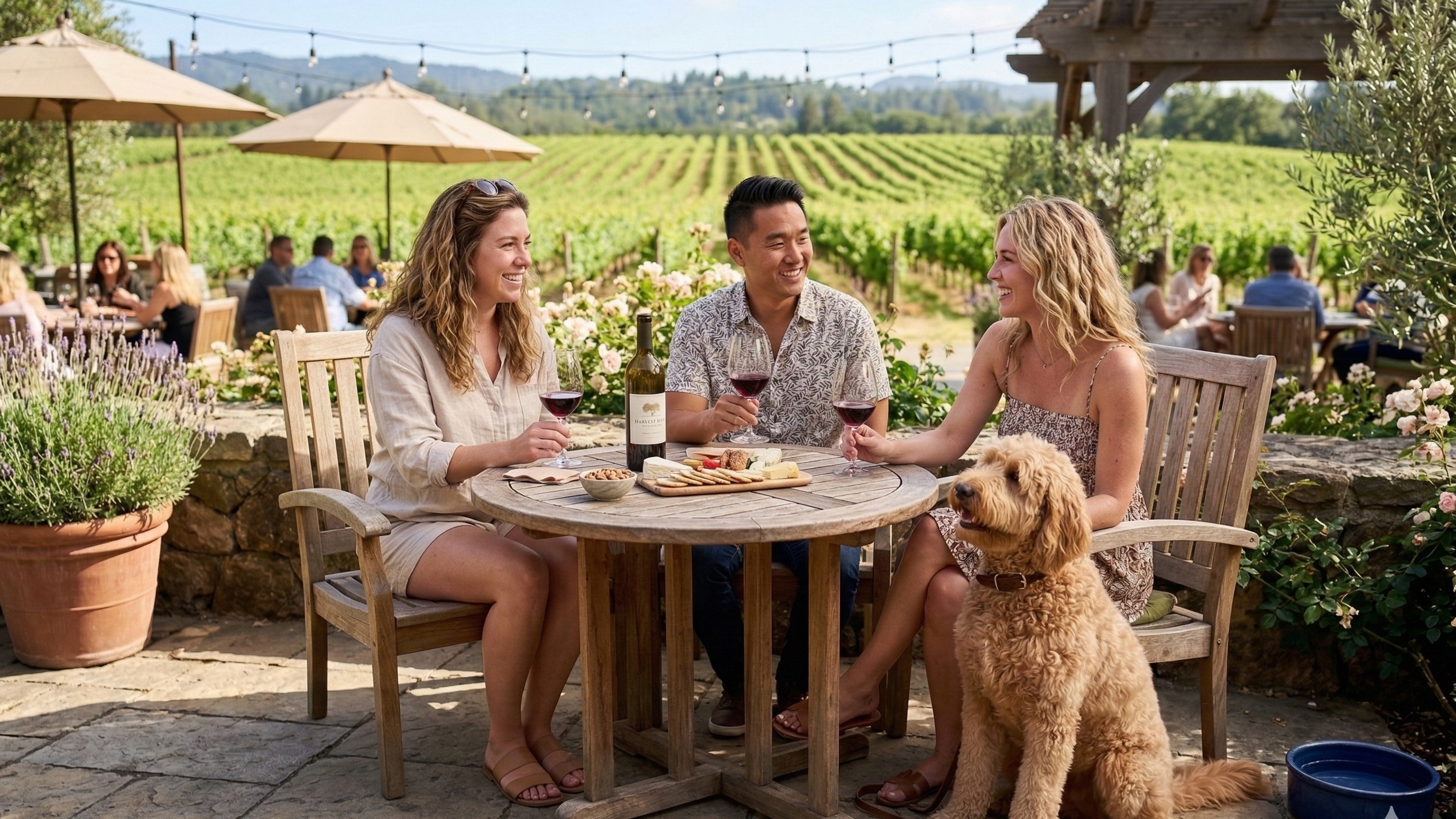
Sonoma is also one of the best regions for bringing the whole crew — with more than 50 dog-friendly wineries, it's significantly more welcoming to four-legged companions than Napa. Many of the smaller, hidden-gem properties with big outdoor spaces are the ones that welcome dogs. And if you're traveling with family, the laid-back Sonoma vibe makes it easier to find kid-friendly stops where everyone can relax.
Browse Sonoma wineries to start exploring. Filter by sub-region, amenities, or walk-in availability to narrow things down. And when you find a place that makes you say "how did nobody tell me about this" — that's the one. That's the gem.