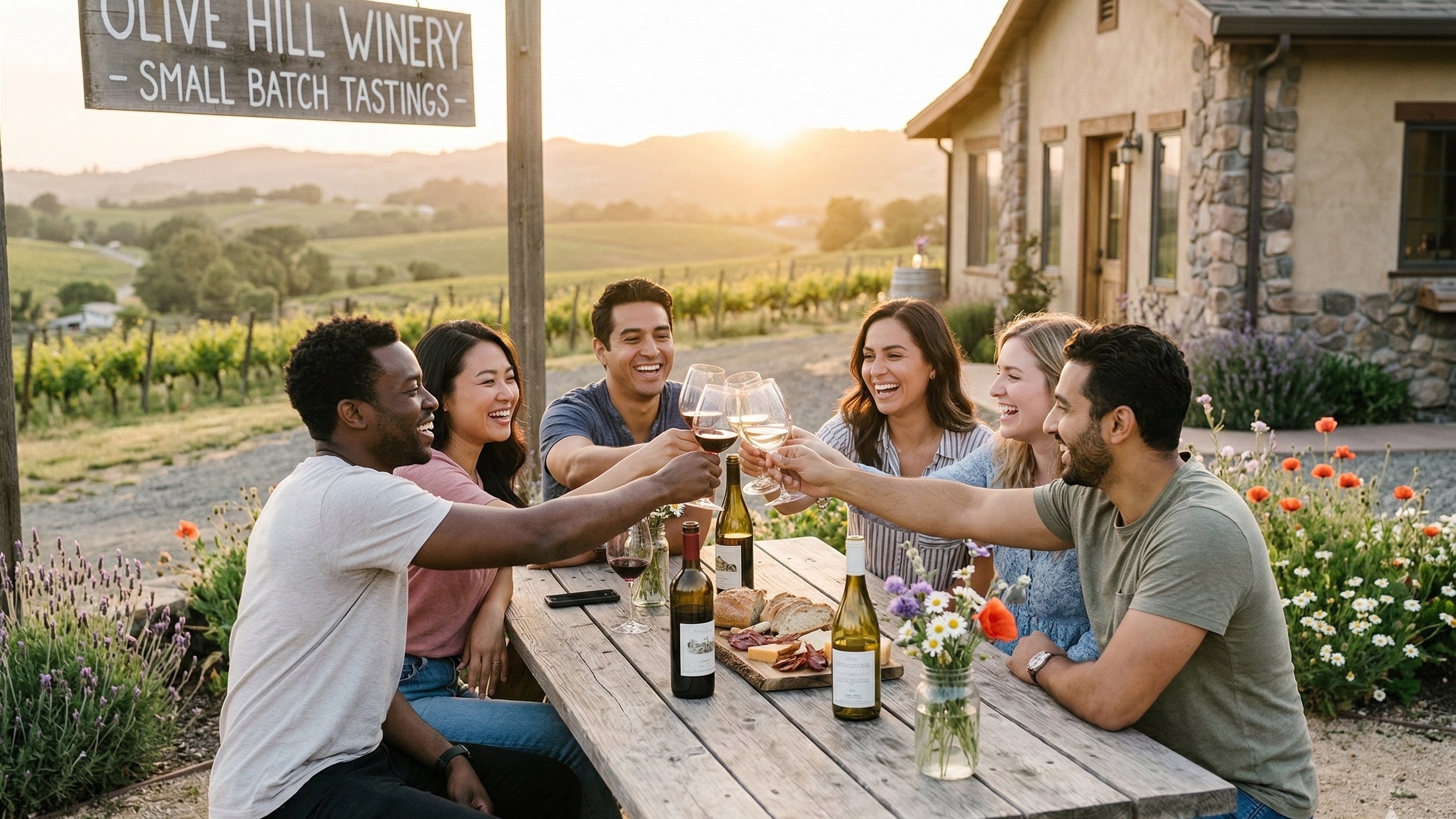
Wine Tasting on a Budget: Napa & Sonoma Under $40
How to have an amazing wine country experience without breaking the bank — affordable tastings, fee-waiving tricks, and the best budget-friendly wineries.
Wine country doesn't have to be expensive. The tasting fees and Michelin-star restaurants get all the attention, but there are genuinely great ways to experience Napa and Sonoma without spending a fortune. A little strategy goes a long way.
Here's how to have an excellent day in wine country on a budget.
What a Day Actually Costs
Before getting into the savings, it helps to know the baseline. Most Napa Valley tastings run $60 to $125 per person, with an average around $105. Sonoma tastings are generally cheaper — many fall in the $35 to $85 range, averaging around $70. With three wineries in a day (the recommended pace), that's somewhere between $105 and $375 per person just on tasting fees.
Add lunch, gas, and maybe a bottle or two to bring home, and a day in wine country can run $200 to $500 per person without trying very hard.
But it doesn't have to. Here's where the numbers start working in your favor.
The Fee-Waiver Strategy
This is the single best budget hack in wine country: many wineries waive the tasting fee if you buy a bottle. It's not every winery, but it's common enough that it should factor into planning.
The math works out nicely. Say a tasting costs $40 and a bottle is $35. If the fee is waived with purchase, you're paying $35 total and going home with a bottle of wine — versus $40 for the tasting alone and nothing to show for it.
Not every winery advertises this, and the policies vary. Some waive the fee with one bottle, some require two. Some waive it entirely, others give a credit toward purchase. It's always worth asking when you arrive: "Do you waive the tasting fee with a bottle purchase?" The staff will tell you straight up.
The budget Napa tastings guide and budget Sonoma tastings guide list wineries where this is an option.
Sonoma Is Easier on the Wallet
This is worth saying directly: if budget is a real consideration, lean toward Sonoma. Tasting fees across Sonoma County are meaningfully lower than Napa. A tasting that's $90 in Napa might be $45 at a comparable winery in Sonoma.
The quality isn't lower — Sonoma produces world-class Pinot Noir, Chardonnay, Zinfandel, and more. The difference is mostly about real estate costs and brand positioning. Sonoma has kept a more down-to-earth identity, and the pricing reflects that.
Areas like Dry Creek Valley and Alexander Valley are particularly good for affordable tastings. Many family-owned wineries in these areas keep fees in the $30 to $45 range, and the experiences are intimate and personal — often poured by the winemaker or a family member.
You can browse Sonoma wineries and sort by price to find what fits.
Tastings Under $40
They exist in both valleys, though they're easier to find in Sonoma. In Napa, the under-$40 tastings tend to be at smaller, less-known wineries — which is honestly a feature, not a bug. These are often the places with the most personality and the best stories.
The cheap Napa tastings guide and cheap Sonoma tastings guide have curated lists. These aren't lesser experiences. Some of the most memorable tastings happen at places where the fee is low and the winemaker is standing right there pouring.
A few patterns for finding affordable tastings:
- Newer wineries often price lower to build their audience.
- Off-the-highway spots that don't get drive-by traffic tend to have lower fees.
- Wineries that focus on one or two varietals often have simpler, less expensive tasting menus.
- Walk-in friendly wineries sometimes have lower fees than appointment-only spots, though not always.
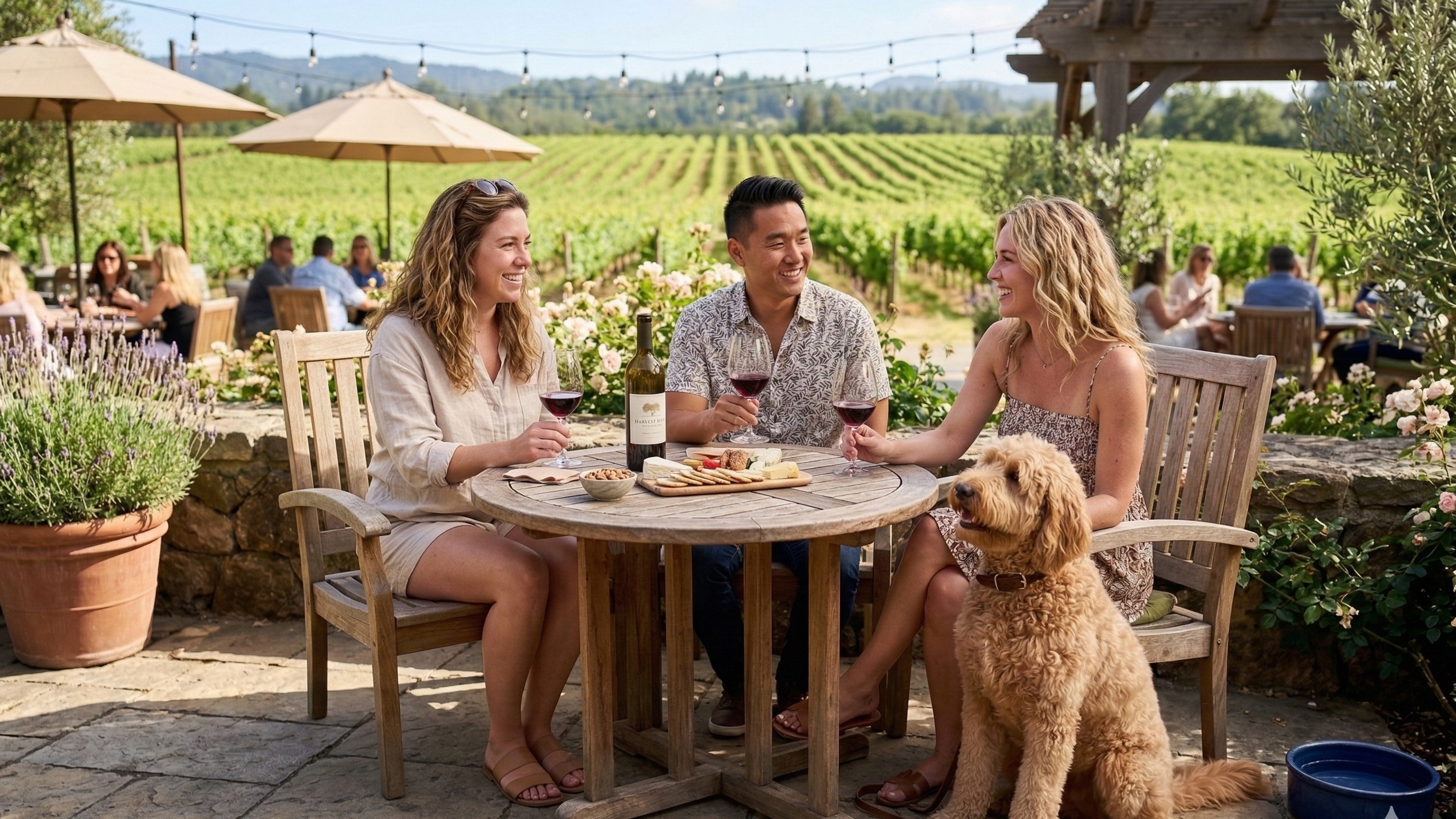
- Dog-friendly wineries — if you're traveling with your pup, Sonoma has more than 50 dog-friendly wineries, many of which also happen to be budget-friendly. Several offer outdoor tastings at lower price points.
The Picnic Lunch Move
Restaurant lunches in wine country can easily hit $50 to $80 per person. The picnic alternative costs a fraction of that and is arguably more fun.
Here's the play: stop at a grocery store or deli before the first tasting. Oakville Grocery in Napa, the Healdsburg farmers' market on Saturdays, or any well-stocked deli in the area will have everything needed — good bread, cheese, charcuterie, fruit, maybe some olives. Total cost for two people: $20 to $35.
Several wineries have picnic grounds where you can eat your own food (some require buying a bottle to drink on-site, which is fair). Parks and roadside spots work too — there's no shortage of beautiful places to sit and eat in wine country.
This saves $60 to $100 compared to a sit-down lunch, and there's something about eating outside with vineyards in every direction that a restaurant can't quite match.
Weekday vs. Weekend Pricing
Some wineries charge more on weekends, and some offer weekday specials or discounted tastings. It's not universal, but visiting Monday through Thursday can save $5 to $15 per tasting at certain spots.
Beyond price, weekdays are just better for budget-minded visits. Smaller crowds mean more personal attention from tasting room staff, which often translates to extra pours or a bonus wine that wasn't on the menu. Nobody's counting sips when the room is empty.
Weekday visits also make it easier to snag reservations at the popular wineries that book up weeks in advance for weekends.
Wine Club Math
Wine clubs are worth understanding from a budget angle. Most wineries offer clubs with benefits like complimentary tastings, discounts on bottles (typically 15 to 25 percent), and access to member-only wines.
If there's a winery you love and you'd buy their wine anyway, a club membership can pay for itself quickly. The complimentary tastings alone — often extended to guests you bring — can save $35 to $125 per visit. Over two or three visits a year, that adds up.
The catch: most clubs ship two to four bottles per quarter at full (or near-full) price. Make sure the commitment fits the budget before signing up. The discount only helps if you'd be buying those bottles regardless.
Free Tastings — Do They Exist?
Truly free tastings are rare, but they're out there. A few scenarios where tastings cost nothing:
- Wine club member visits. Most clubs include complimentary tastings.
- Grand opening or special events. New wineries sometimes offer free tastings during launch events.
- Festivals and wine trails. Events like Passport weekends sometimes include tastings in the ticket price, and the per-winery cost works out to very little.
- Some tasting rooms in downtown areas (Healdsburg, Sonoma Plaza, Yountville) occasionally do complimentary pours of a single wine to draw people in.
Don't plan a whole trip around finding free tastings — they're the exception. But keeping an eye on local event calendars can turn up deals.
A Sample Budget Day
Here's what a well-planned budget day for two people might look like:
Morning: Tasting at a Sonoma winery with a $25/person fee that's waived with a bottle purchase. Buy one bottle ($30). Cost: $30.
Late morning: Second tasting at a nearby winery, $30/person. Cost: $60.
Lunch: Picnic at a park with deli supplies picked up on the way. Cost: $30.
Afternoon: Third tasting at a winery with a $35/person fee, waived with purchase. Buy a bottle ($28). Cost: $28.
Day total for two people: $148. That's three tastings, a nice lunch, and two bottles of wine to take home. Compare that to the $500+ that a no-planning day in Napa can run.
More Ways to Stretch the Budget
Share tastings where allowed. Some wineries let two people share a single tasting flight. Not all do, and it's worth asking rather than assuming — but when it's an option, it cuts the per-person cost in half.
Visit during slower seasons. January through March is the quiet season. Some wineries run winter specials, and even the ones that don't are more relaxed and generous when the tasting room isn't packed.
Use the trip planner for routing. The trip planner helps build a route that minimizes driving between stops. Less backtracking means less gas money and more time at each winery. The interactive map helps visualize which wineries cluster together.
Compare before you go. The winery comparison tool is useful for looking at tasting fees, wine styles, and amenities side by side before committing to a plan.
An incredible wine country day doesn't require a big budget. The best experiences — a conversation with a winemaker at a tiny family winery, a picnic with vineyard views, discovering a bottle that becomes a new favorite — those things have nothing to do with how much was spent getting there.